
Spaces:
Sleeping

Sleeping
File size: 2,013 Bytes
980dc8d |
1 2 3 4 5 6 7 8 9 10 11 12 13 14 15 16 17 18 19 20 21 22 23 24 25 26 27 28 29 30 31 32 33 34 35 36 37 38 39 40 41 42 43 44 45 46 47 48 49 50 51 52 53 54 55 56 57 58 |
---
title: "Interactive Notebooks: Marimo"
original_url: "https://tds.s-anand.net/#/marimo?id=interactive-notebooks-marimo"
downloaded_at: "2025-06-08T23:25:35.286078"
---
[Interactive Notebooks: Marimo](#/marimo?id=interactive-notebooks-marimo)
-------------------------------------------------------------------------
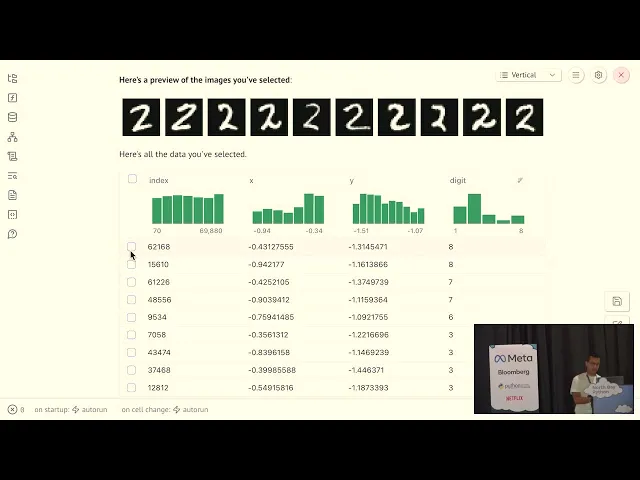
[Marimo](https://marimo.app/) is a new take on notebooks that solves some headaches of Jupyter. It runs cells reactively - when you change one cell, all dependent cells update automatically, just like a spreadsheet.
Marimo’s cells can’t be run out of order. This makes Marimo more reproducible and easier to debug, but requires a mental shift from the Jupyter/Colab way of working.
It also runs Python directly in the browser and is quite interactive. [Browse the gallery of examples](https://marimo.io/gallery). With a wide variety of interactive widgets, It’s growing popular as an alternative to Streamlit for building data science web apps.
Common Operations:
```
# Create new notebook
uvx marimo new
# Run notebook server
uvx marimo edit notebook.py
# Export to HTML
uvx marimo export notebook.pyCopy to clipboardErrorCopied
```
Best Practices:
1. **Cell Dependencies**
* Keep cells focused and atomic
* Use clear variable names
* Document data flow between cells
2. **Interactive Elements**
```
# Add interactive widgets
slider = mo.ui.slider(1, 100)
# Create dynamic Markdown
mo.md(f"{slider} {"🟢" * slider.value}")Copy to clipboardErrorCopied
```
3. **Version Control**
* Keep notebooks are Python files
* Use Git to track changes
* Publish on [marimo.app](https://marimo.app/) for collaboration
[](https://youtu.be/9R2cQygaoxQ)
[Previous
Narratives with LLMs](#/narratives-with-llms)
[Next
HTML Slides: RevealJS](#/revealjs) |